
What Is Vibe Coding? A Guide for Business Teams
Vibe coding lets non-technical Singapore teams build working apps and internal tools using plain language and AI — no developer required. This guide covers what it is, what teams are


Fourteen departments, one AI budget. The real question isn’t whether to train your team — it’s which generative AI course in Singapore matches each role so every dollar drives measurable capability. Addestra Learning Centre maps hands-on generative AI courses directly to job functions, from marketing and design to operations, finance, and leadership. This role-by-role buyer’s guide helps L&D managers and business owners skip the guesswork and pick the right programme for every department.
That matters because, as the World Economic Forum’s Future of Jobs Report 2025 confirms, AI and big data top the list of skill clusters employers expect to grow in importance through 2030. In Singapore, Smart Nation initiatives and enterprise digitalisation frameworks are accelerating demand even further. The gap isn’t interest. It’s knowing AI literacy vs AI skills: what the distinction means for training Singapore teams — and matching the right depth of training to each person’s actual work.
A generic “intro to AI” workshop gives everyone the same surface-level exposure. That’s fine for awareness. However, it doesn’t change how your marketing team writes briefs, how operations automates purchase orders, or how your designers prototype faster.
Role-mapped training solves this by anchoring every exercise in the participant’s real tasks. Your content team practises generating campaign assets. Your data analysts build dashboards with AI-assisted tools. Your operations staff automate repetitive admin workflows. The result is immediate application, not theoretical appreciation.
For a deeper look at the productivity gains this approach unlocks, see how generative AI improves workplace productivity in Singapore.
Before mapping courses to departments, one skill cuts across all of them: prompt engineering. The quality of any AI output depends on the quality of the input. According to McKinsey’s State of AI 2025 report, prompt engineering has emerged as a foundational capability applicable across marketing, sales, operations, and finance alike.
For teams just beginning their AI journey, the Advanced Prompt Engineering Course teaches structured prompting techniques that participants apply to their own job scenarios during the session. You can also read more about prompt engineering for business in Singapore to understand why this skill pays dividends across every function.
With that foundation in mind, here’s how to match each team to a specific generative AI course in Singapore.
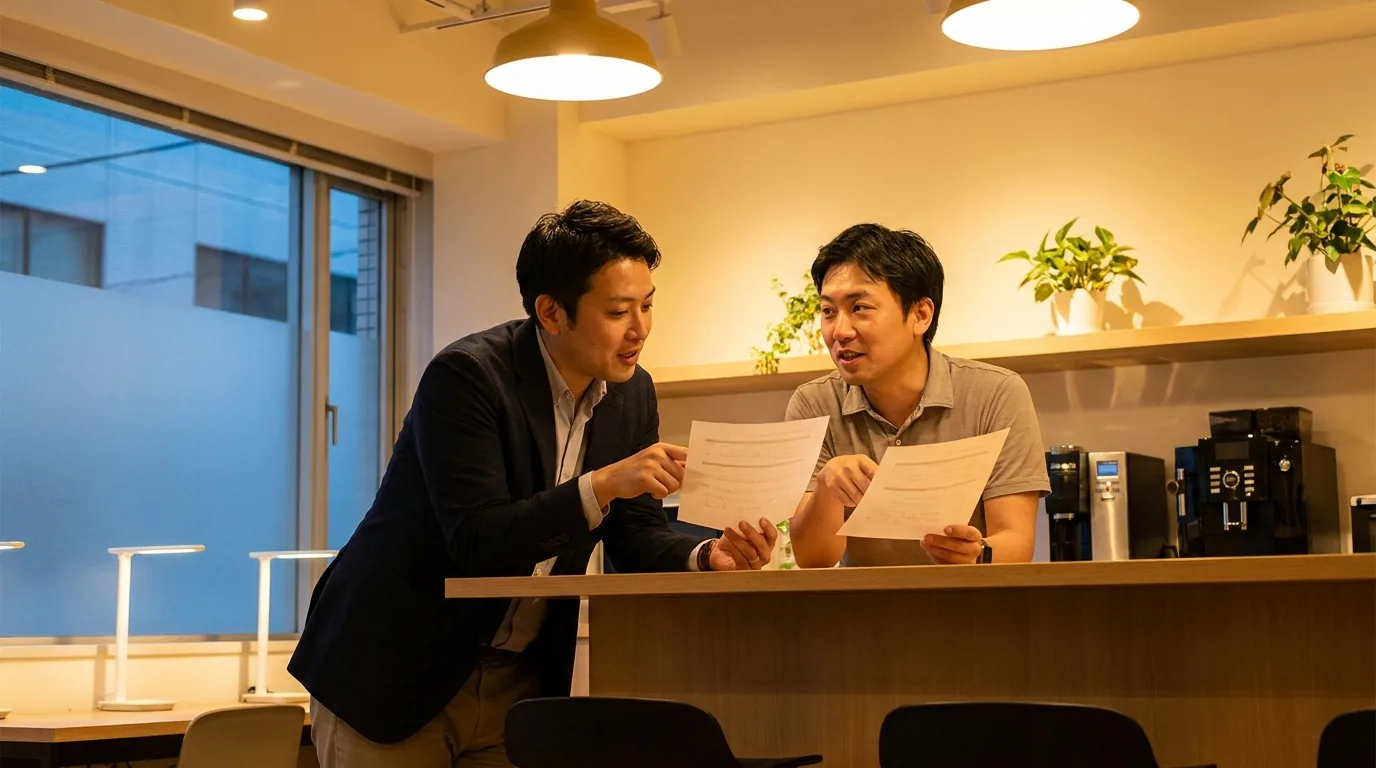
Goal: Generate campaign copy, social content, and visual assets faster without sacrificing brand consistency.
Best fit: The TikTok Content AI Workshop: Content Accelerator is purpose-built for marketers who need to produce short-form video content at scale using AI tools. It’s hands-on, not lecture-based — participants leave with usable content drafts.
For marketing leaders who also need to rethink campaign strategy through an AI lens, the Generative AI for Enterprise Growth programme connects AI capabilities to revenue outcomes.
If you’re looking for an ai design course Singapore teams can apply immediately, the AI Design Thinking Course blends generative AI tools with structured design thinking methodology. This ai in design course teaches participants to use AI for rapid prototyping, ideation, and user experience iteration.
Goal: Compress the ideation-to-prototype cycle and integrate AI-generated visuals, layouts, and concepts into existing design workflows.
Goal: Automate repetitive workflows — data entry, scheduling, document processing, vendor coordination — and free up capacity for higher-value tasks.
Best fit: The AI Agents for Admin & Operations course trains participants to deploy AI agents that handle multi-step administrative tasks autonomously. For teams ready to go further, the Agentic AI Workflow for Businesses programme covers end-to-end workflow automation using agentic AI systems.
This distinction matters. Gartner’s Top Strategic Technology Trends for 2025 identifies agentic AI as a top enterprise priority, marking a significant shift beyond basic generative AI use.
Goal: Build AI-assisted dashboards, automate data cleaning, and generate insights from large datasets without relying entirely on IT.
Best fit: The AI-Powered Data Analytics Course gives analysts and business intelligence staff practical skills in using generative AI for data preparation, visualisation, and pattern recognition.
Goal: Accelerate application development, build internal tools, and prototype solutions — even when coding resources are limited.
Best fit: The Vibe Coding for Business Growth course teaches teams to build working apps and tools using natural-language AI coding. It’s designed for both technical and semi-technical staff who need to move from idea to prototype quickly.
With SGX sustainability reporting requirements expanding and climate-related disclosures becoming mandatory for listed companies, ESG teams face growing data and reporting complexity. AI can help.
Best fit: The AI-Powered Sustainability Management Course trains sustainability officers and CSR teams to use generative AI for ESG data collection, report drafting, and compliance tracking.
Goal: Evaluate AI-driven business model opportunities, lead digital transformation initiatives, and make informed decisions about where AI creates genuine value.
Three courses serve this audience at different angles:
| Team / Role | Primary Course |
|---|---|
| Marketing & Content | TikTok Content AI Workshop |
| Design & Innovation | AI Design Thinking Course |
| Operations & Admin | AI Agents for Admin & Operations |
| Operations (Advanced) | Agentic AI Workflow for Businesses |
| Data & Analytics | AI-Powered Data Analytics |
| IT & Product Dev | Vibe Coding for Business Growth |
| Sustainability / ESG | AI-Powered Sustainability Management |
| Strategy & C-Suite | AI-Driven Business Models / Digital Transformation Framework |
| All Roles (Foundation) | Advanced Prompt Engineering |
If you’d like to discuss which combination fits your organisation, get in touch with Addestra’s team to talk through your departments and goals.
Start with prompt engineering for all teams, then layer in role-specific courses for the departments with the highest immediate impact, and finally add strategic programmes for leadership.
You don’t need to enrol every department at once. A practical approach for most organisations:
Start with the foundation. Run prompt engineering training across all teams first. This gives everyone a common AI vocabulary and baseline capability.
Then go role-specific. Pick the two or three departments where AI will have the most immediate operational impact. For many companies, that’s marketing and operations. For others, it’s data analytics or sustainability.
Build from there. As teams gain confidence, layer in strategic programmes for leadership so AI adoption becomes a top-down, organisation-wide initiative rather than isolated pockets of experimentation.
Every Addestra course is fully customisable to your company’s context, industry, and tools. That means the exercises, case studies, and outputs are built around your team’s actual work — not generic demos.
For organisations that want to go beyond individual courses and design a comprehensive internal AI training programme, this companion guide on what a strong AI training programme for Singapore teams should include covers the full framework from needs assessment to rollout.
Prompt engineering is the best starting point for any team, regardless of role. It gives all staff a shared AI vocabulary and immediately improves the quality of outputs they get from any AI tool. Most providers in Singapore, including Addestra, offer a dedicated prompt engineering course suitable for mixed-function groups.
Most role-specific AI courses in Singapore are designed for practitioners, not developers, so coding experience is not required. Courses like AI Agents for Admin & Operations or AI Design Thinking are built around real job tasks, making them accessible to non-technical staff while still delivering practical, applicable skills.
Most hands-on generative AI workshops in Singapore run between one and two days, depending on depth and role focus. Foundational courses such as prompt engineering can be completed in a single day, while more advanced programmes covering agentic AI or digital transformation frameworks may span multiple sessions.
Phasing is generally more effective. Start with a foundation course across all roles, then prioritise the two or three departments where AI will have the fastest operational impact — commonly marketing, operations, or data analytics. Leadership programmes can follow once frontline teams have built baseline confidence.
Align the course to the team’s primary output. Content teams benefit from AI tools for copy and creative assets; operations teams need workflow automation training; analysts need AI-assisted data tools. A role-by-role course map, like the one Addestra publishes, helps L&D managers shortlist programmes without trialling each one individually.
Matching the right hands-on AI training in Singapore to each team role is what turns a training budget into a capability shift. Browse the full generative AI course catalogue to compare programmes, or share this guide with your L&D team as a shortlist. With nearly 20 years of corporate training experience across government agencies, MNCs, and SMEs, Addestra builds every session around what your people actually do at work — so the skills stick from day one.
Vibe coding lets non-technical Singapore teams build working apps and internal tools using plain language and AI — no developer required. This guide covers what it is, what teams are

Addestra’s free AI prompting webinar in Singapore — Beyond Basic AI Prompting — teaches working professionals structured prompting frameworks, hallucination reduction strategies, and reusable prompt templates in a live 90-minute

No-code AI automation is helping Singapore admin and ops teams move beyond rigid rule-based tools—enabling non-technical staff to build workflows that read, classify, and act on information without a single

AI hallucinations are the single biggest barrier to reliable AI adoption in Singapore workplaces. This article covers five practical techniques any business team can apply to reduce fabricated outputs and