You’ve got budget approval for a team building workshop, and now the real pressure starts. Your manager expects measurable results. Your team expects something that doesn’t waste their afternoon. And somewhere in the back of your mind, you’re picturing that last off-site where everyone smiled politely, then went back to the same old patterns on Monday.
That worry is completely valid. Too many programmes earn exactly that reputation. However, a well-designed team building workshop looks nothing like a forgettable activity day. While a team bonding workshop in Singapore might focus purely on social connection and good vibes, a structured workshop goes further. It has a clear objective, a deliberate design, and a debrief that connects the experience back to how your team actually works together. In other words, the difference between a waste of budget and a session that shifts collaboration comes down to design, facilitation, and follow-through.
Here’s what that actually involves — and how to find a workshop that delivers real results.
Which Format Suits Your Team’s Situation
Before diving into logistics or activities, the most important question is this: what does your team actually need right now? The format should match your team’s current reality, not a provider’s default template.
New Teams or Post-Restructure Teams
When people don’t yet know how to work together, the workshop needs to prioritise trust-building and communication norms. For example, activities should surface working preferences early and give team members a low-stakes environment to learn each other’s styles. As a result, the team leaves with a shared understanding of how each person operates — rather than months of trial and error.
Teams Experiencing Friction or Conflict
This requires careful facilitation. The workshop isn’t therapy, but it can create a structured space where underlying tensions surface safely. In practice, activities should be designed to require genuine collaboration, and the debrief needs to address what emerged without turning into a blame session. The facilitator’s skill matters enormously here.
High-Performing Teams Looking to Level Up
These teams don’t need fixing — they need stretching. Workshops for high-performing teams often focus on creative problem-solving, strategic alignment, or innovation challenges. The goal is to push the team beyond comfortable routines and expose blind spots they didn’t know they had.
Cross-Functional or Multi-Department Teams
Groups that span departments often struggle with siloed thinking and competing priorities. In contrast to single-team workshops, the best sessions for cross-functional teams simulate interdependence. Participants experience firsthand how their decisions affect other departments, which shifts perspective far more effectively than a presentation ever could.
This is exactly why you should check out our list of team building activities. At Addestra, have customisable workshops and training designed for newly merged team and how it should look completely different from one aimed at a leadership cohort preparing for a strategy shift.
What a Team Building Workshop Actually Looks Like
Once you’ve identified the right format, it helps to know what a well-structured session involves. In practice, a good team building workshop in Singapore follows three stages: understanding the team, running purposeful activities, and debriefing what happened.
Understanding the Team Before the Session
Before anyone enters the room, the facilitator needs context. What’s happening in this team right now? Are they newly formed? Going through a restructure? Struggling with cross-departmental communication?
These answers shape everything — from activity selection to the questions asked during the debrief. For instance, some teams benefit from profiling tools that map out individual working styles and communication preferences. When this kind of insight is available, it gives the facilitator and the team a shared language to work with throughout the session.
Running Purposeful Activities
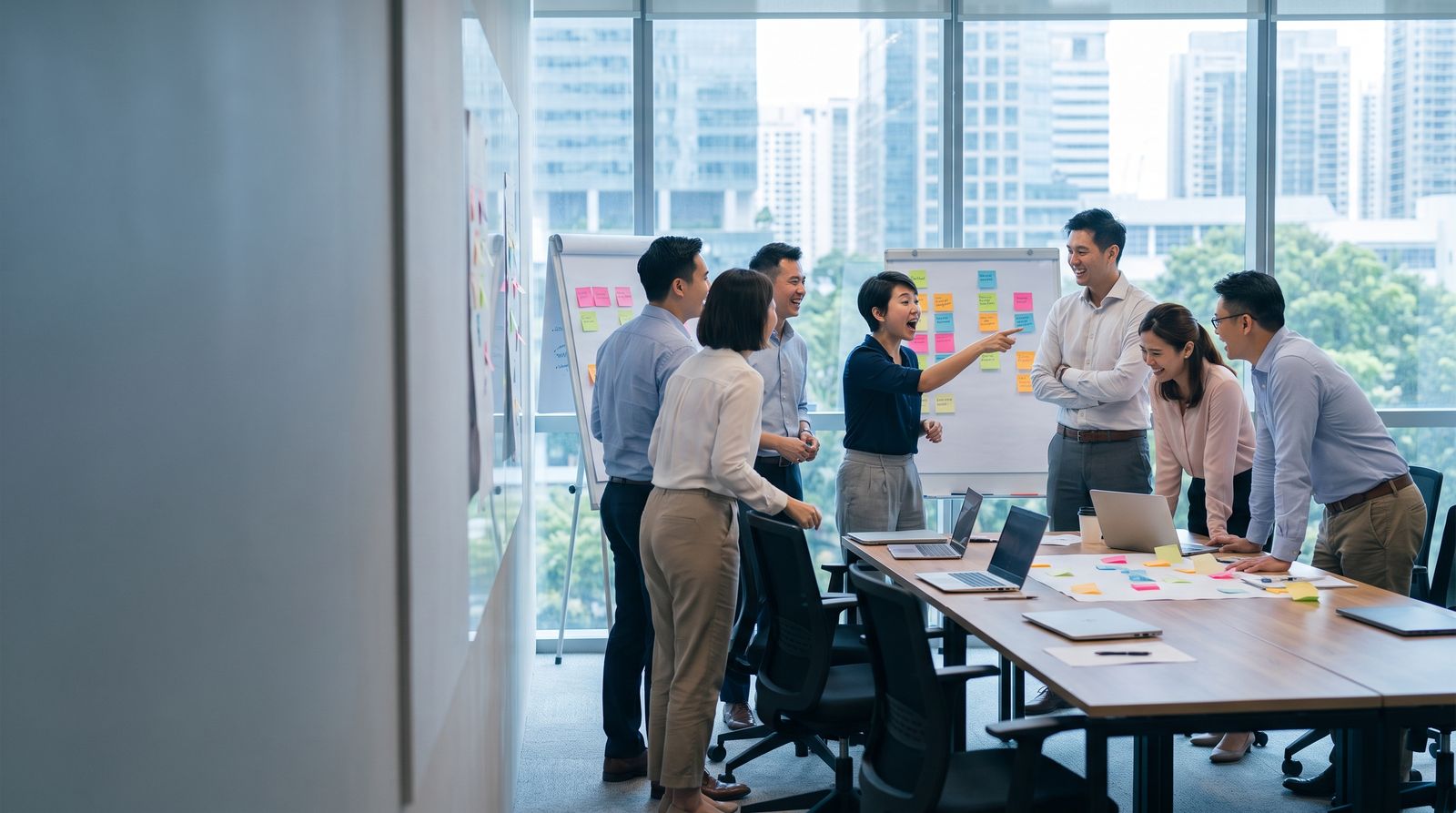
The activities themselves should be deliberately chosen, not just entertaining. They create situations where real team dynamics surface — how decisions get made under pressure, who steps forward, who holds back, and how conflict gets navigated or avoided.
The format depends on what the team needs. Our team building activities range from collaborative problem-solving challenges and scenario-based simulations to structured communication exercises — each built with a facilitation framework in mind, not just a fun activity. For a closer look at how specific formats play out in a Singapore workplace context, we’ve also covered a number of interactive team building activities in Singapore in more detail.
The key distinction is this: activities are the vehicle, not the destination. Without facilitation, they’re just games.
Debriefing What Actually Happened
This is where the real value shows up. A skilled facilitator helps the team connect what just happened in the activity to what happens daily at work. What patterns showed up? What worked? What broke down?
In our experience, the debrief is the stage most providers rush or skip entirely. That’s a problem, because it’s what transforms a shared experience into shared insight. As a result, teams leave with language for behaviours they previously couldn’t name — and that language is what makes change stick.
What Outcomes a Good Workshop Actually Delivers
A common question from HR managers and L&D leads is straightforward: “What will be different after this?” It’s the right question, and it deserves an honest answer.
Improved Communication Clarity
Teams develop shared vocabulary for how they work together. Instead of vague frustrations like “she never listens,” they can identify specific patterns — for example, “we tend to skip the alignment step before making decisions.” That shift from blame to observation changes how teams resolve issues.
Stronger Psychological Safety
When people feel safe enough to disagree, ask questions, and admit mistakes, teams solve problems faster and innovate more freely. A well-run team building workshop creates a controlled environment where that safety gets practised. Over time, this carries back into day-to-day interactions.
Visible Behavioural Shifts
The pattern we notice with teams we’ve worked with: the changes aren’t always dramatic, but they’re tangible. Meetings run differently. Feedback flows more easily. Colleagues default less to email when a two-minute conversation would resolve things faster.
That said, for these outcomes to stick, the workplace team building programme should connect to a broader development strategy. A one-off workshop can spark change. However, a workshop embedded in an ongoing learning plan sustains it.
How to Evaluate Whether a Provider Is the Right Fit
If you’re evaluating corporate team building in Singapore, the market is crowded and quality varies significantly. Here’s what to look for when you’re making the call.
Do They Customise or Just Rebrand?
Some providers run the same programme for every client and simply swap the company name on the slides. Ask specifically how they’ll tailor the workshop to your team’s situation. If they can’t describe a discovery or diagnostic process, that’s a red flag.
Who’s Actually in the Room Facilitating?
The facilitator is the most important variable — more than the slides, the venue, or the activity list. Ask about their background. Have they worked with teams similar to yours? Do they have experience handling group dynamics that go sideways? A polished deck means very little without a skilled person running the room.
What Happens After the Workshop?
Providers who care about outcomes will talk about post-workshop reinforcement. This might include follow-up resources, check-in sessions, or integration with other development programmes. In contrast, if their engagement ends when the last activity finishes, the impact probably will too.
Can They Show a Track Record?
Look for providers with experience across different team types and industries. Working with government agencies, MNCs, and SMEs requires different sensitivities and approaches. A provider who has navigated that range is more likely to handle your team’s specific dynamics well. For a broader view, our guide to corporate training providers in Singapore covers what to consider when selecting a training partner.
Getting the Most from Your Team Building Workshop
Even the best-designed workshop can underperform if the setup isn’t right. However, a few things consistently make the difference between a session that fades and one that lands.
Brief your team honestly. Don’t oversell it as “just a fun day” if it involves real reflection. People engage better when they know the purpose upfront.
Give the facilitator access to real context. The more they understand about your team’s challenges, the more relevant the session becomes. Vague briefs lead to generic workshops — and generic workshops are what give team building a bad name.
Protect the time. Half-day workshops squeezed between back-to-back meetings lose their impact. Give the session room to breathe, and your team will engage at a completely different level.
Follow up after the session. Reference the workshop in subsequent meetings. Revisit the language that emerged. Even one touchpoint after the session doubles the retention of what was learned.
Your Next Step
A team building workshop in Singapore should do more than fill a calendar slot. It should give your team tools, language, and momentum they can carry back to work the next day — and give you confidence that the budget was well spent.
If you’re planning a workshop and want to explore what format would suit your team, browse our team building activities to see what we run, or contact us for a conversation. We’ll help you design something that fits your team’s actual situation, not a one-size-fits-all template.