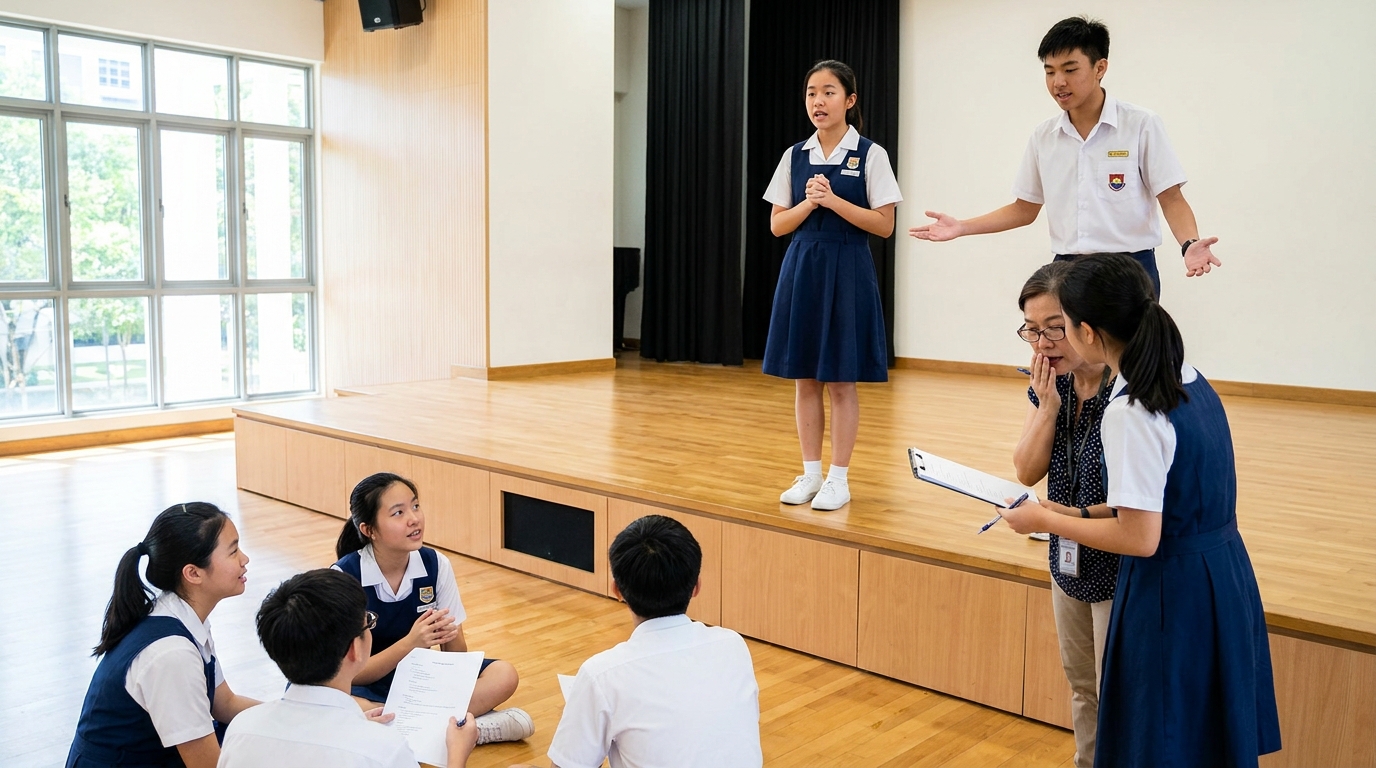
You’ve been asked to find a speech and drama provider for next year’s CCA or enrichment programme. There are dozens of options, and most of their websites look remarkably similar — energetic photos, vague promises about “building confidence,” and a list of schools they’ve worked with. So how do you actually tell which provider will deliver a structured, meaningful programme — and which one will leave your students doing icebreakers for ten weeks?
Choosing the right speech and drama classes in Singapore schools is a decision that affects student development, CCA records, and your school’s broader educational goals. It deserves a sharper evaluation framework than “who’s available and affordable.” This guide walks you through what to look for, what to ask, and what separates a great school drama programme from a mediocre one.
Why Speech and Drama Matters More Than Ever in Singapore Schools
Speech and drama directly supports MOE’s 21st Century Competencies framework and the English Language Syllabus 2020’s oracy requirements. It also feeds into LEAPS 2.0 CCA assessment criteria — making it a strategically significant programme choice, not a peripheral one.
It Builds Core 21CC Competencies
Speech and drama isn’t a soft option. It sits at the intersection of several priorities that Singapore’s education system has been steadily emphasising.
MOE’s 21st Century Competencies (21CC) framework explicitly identifies communication, collaboration, and self-awareness as core competencies. A well-designed speech and drama enrichment programme develops all three. Students build concrete, practised skills — articulation, active listening, ensemble work, and expressive delivery — rather than abstract outcomes on paper.
It Supports Oracy and English Language Development
There’s also the oracy dimension. MOE’s English Language Syllabus 2020 places spoken interaction and oral communication as core components of English language learning. Speech and drama directly supports this. Students practise projecting their voice, structuring spoken arguments, and responding in real time. Furthermore, it complements what’s happening in the classroom in ways that a worksheet never will. If you’re exploring how oracy programmes in Singapore schools are gaining traction, speech and drama is one of the most natural delivery vehicles.
It Has Practical Stakes for LEAPS 2.0
For secondary schools, the stakes are concrete. CCA records contribute to the LEAPS 2.0 framework, which assesses character development, leadership, service, and achievement. As a result, the quality of your drama CCA isn’t just an enrichment nice-to-have — it directly shapes how students are assessed.
The Difference Between Community Drama Classes and a School-Facing Programme
A school-facing speech and drama programme must align with MOE frameworks, manage large groups within timetable constraints, and deliver reportable outcomes — requirements that community drama classes are simply not designed to meet.
This is where many schools get tripped up. A provider that runs excellent weekend drama classes for children is not necessarily equipped to deliver a structured school drama programme in Singapore.
Here’s why. Community or private drama classes typically serve individual students (or parents choosing on their child’s behalf). The curriculum is designed to be fun and engaging, and outcomes are measured in terms of individual enjoyment and participation. That’s perfectly valid — but it’s a different brief.
A school-facing speech and drama programme needs to do more. It must align with your school’s educational philosophy, integrate with MOE frameworks like CCE (Character and Citizenship Education), and deliver measurable student development outcomes. It needs to work within timetable constraints, manage large groups effectively, and produce something your school can report on meaningfully.
When you’re evaluating a CCA programme provider in Singapore, ask yourself: is this provider designed for schools, or are they adapting a consumer product for the school context? The answer shapes everything from curriculum design to classroom management to post-programme reporting.
Five Evaluation Criteria for Selecting a Speech and Drama Provider
1. Curriculum Structure and Progression
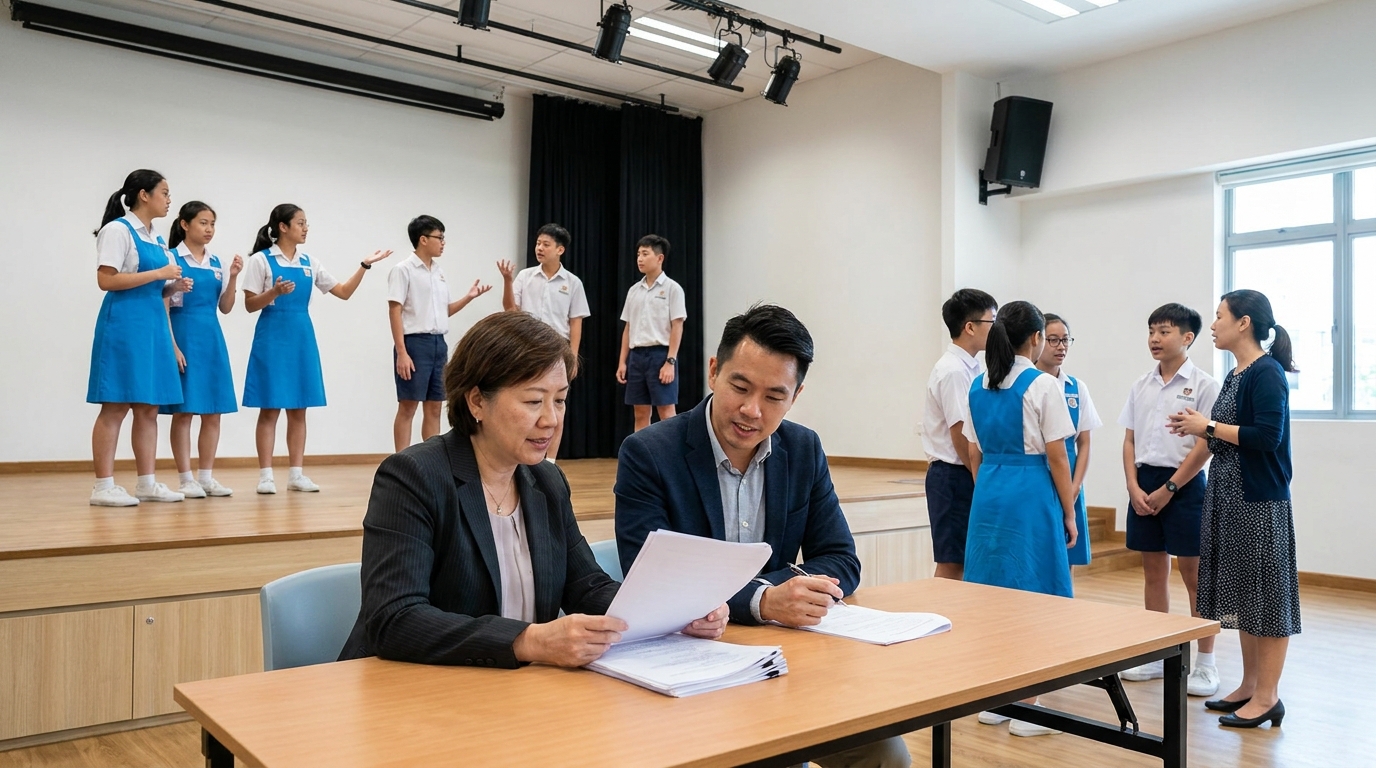
The first thing to examine is whether the programme has a genuine curriculum — not just a collection of drama games and activities. A strong speech and drama enrichment programme should have clearly defined learning outcomes per session, a progression arc across the term or year, and a balance between skill-building (voice, movement, expression) and application (scene work, presentations, ensemble performance).
Ask the provider: can you show me a sample scheme of work? How does Week 1 connect to Week 10? If the answer is vague or overly flexible (“we adapt to the students”), that can sometimes mean there’s no real structure underneath.
2. Trainer Qualifications and School Experience
Drama facilitation is a skill. School drama facilitation is a specialised one. Your trainers need to manage groups of 20–40 students and differentiate for mixed abilities. They also need to handle the energy dynamics of primary versus secondary students — all while maintaining discipline without killing the creative atmosphere.
In practice, look for providers whose trainers have direct experience in Singapore school settings — not just theatre credentials. Ask about trainer-to-student ratios, how trainers are briefed on your school’s values, and whether the same trainer is assigned consistently. Consistency matters enormously in drama work, where trust between trainer and students is foundational.
3. Alignment with MOE Frameworks
A provider worth engaging should be able to articulate how their programme connects to your school’s development priorities. This means more than name-dropping “21CC” on a brochure. Can they explain how specific activities build social-emotional learning outcomes like empathy, self-regulation, and social awareness — outcomes that align with MOE’s SEL framework?
The National Arts Council Singapore recognises drama and theatre as valued disciplines for school engagement. A provider with genuine school expertise will understand this ecosystem. More importantly, they’ll help you connect the programme to your school’s existing frameworks — whether that’s CCE, Values in Action, or the English Language syllabus.
4. Student Outcomes and Evidence of Impact
Ask for specifics. What does student progress look like in this programme? How do you assess it? What can you show me from previous school engagements?
Strong providers will offer observable and documented outcomes — student reflections, teacher feedback summaries, rubric-based assessments, or showcase recordings. They should also be comfortable discussing what didn’t work and how they’ve refined their approach. A provider that claims every programme is a resounding success is a provider that isn’t reflecting honestly.
For schools running drama CCA Singapore students take seriously, the ability to demonstrate progress and achievement matters for LEAPS 2.0 reporting. Your provider should understand this and build assessment touchpoints into the programme design.
5. Track Record and School-Specific References
A provider with extensive experience working with MOE schools brings a fundamentally different perspective than one that started offering school programmes last year. That experience means understanding term schedules, exam periods, and school event calendars. It also means knowing how to work within institutional structures when priorities shift.
Ask for school references — and actually contact them. Find out whether the provider was responsive, professional, and flexible when things changed. A provider’s track record across dozens of schools, in short, tells you far more than a polished presentation deck.
How Speech and Drama Connects to Your School’s Broader Programme Mix
One of the strongest cases for investing in quality speech and drama classes in Singapore schools is how they complement other programmes your school may already run.
If you offer debate and public speaking programmes for Singapore schools, speech and drama builds the foundational expressive confidence that makes students stronger debaters and speakers. If your school prioritises student leadership training in Singapore, drama develops the presence, empathy, and communication skills that underpin effective leadership.
Speech and drama isn’t a standalone novelty — it’s a multiplier. When it’s well-delivered, it strengthens outcomes across your student development portfolio.
Red Flags to Watch For
Not every provider that offers speech and drama classes in Singapore is the right fit for your school. Be cautious if you encounter:
- No written curriculum or scheme of work. If it’s all improvised, the outcomes will be too.
- Trainers with no school experience. Theatre professionals and school facilitators require different skill sets.
- Vague alignment claims. If a provider can’t explain specifically how their programme connects to MOE’s frameworks, they probably haven’t thought it through.
- No post-programme reporting. You need something tangible to share with your school leaders and to document for CCA records.
- One-size-fits-all programming. A programme designed for Primary 3 students should look fundamentally different from one for Secondary 3 students. If it doesn’t, the provider isn’t differentiating.
Making Your Decision with Confidence
Selecting a speech and drama enrichment programme is an investment in your students’ communication skills, emotional development, and creative confidence. The right provider will make your job easier. They’ll handle the pedagogy, manage the students effectively, align with your school’s values, and deliver outcomes you can stand behind.
The wrong provider will generate complaints, produce thin results, and leave you scrambling to find someone better next year.
Take the time to evaluate properly. Use the criteria above to structure your conversations with potential providers, and don’t settle for impressive marketing over substantive answers.
Frequently Asked Questions
Q: What should a school look for when choosing a speech and drama CCA provider in Singapore?
Look for a provider with a structured curriculum showing clear session-by-session progression, trainers with direct Singapore school experience, and demonstrated ability to align with MOE frameworks such as 21CC and CCE. Post-programme reporting and school-specific references are also essential indicators of a provider built for the school context.
Q: How does a speech and drama programme support LEAPS 2.0 CCA records?
LEAPS 2.0 assesses students across character development, leadership, service, and achievement. A well-structured drama CCA generates documented evidence of student progress — through rubric-based assessments, showcases, and teacher feedback — that directly supports meaningful LEAPS 2.0 reporting for secondary school students.
Q: Is there a difference between community drama classes and a school enrichment programme?
Yes. Community drama classes are designed for individual enjoyment and participation, whereas a school-facing programme must align with MOE educational frameworks, manage large groups within fixed timetables, and produce reportable student development outcomes. A provider that only offers consumer-facing classes may not have the systems or experience required for a school context.
Q: How can speech and drama classes improve oracy skills in Singapore students?
Speech and drama gives students structured, repeated practice in voice projection, articulation, spoken argumentation, and real-time response — all core components of MOE’s English Language Syllabus 2020. Unlike classroom worksheets, drama activities require students to practise oral communication actively and consistently across every session.
Q: What red flags should HODs watch for when evaluating a drama enrichment provider?
Key warning signs include no written scheme of work, trainers without school facilitation experience, vague claims about MOE alignment without specific explanation, no post-programme reporting, and identical programming across all age groups. These gaps suggest a provider has not genuinely designed their offering for the school environment.
Q: How long does it take for students to show measurable progress in a speech and drama programme?
Strong providers build assessment touchpoints throughout the term, so progress is visible at multiple stages rather than only at the end. Providers with close to two decades of experience in Singapore schools typically have refined their progression models to produce observable outcomes within a single school term.
If you’re looking for an experienced CCA and enrichment programme provider in Singapore with a proven track record across MOE primary and secondary schools, Addestra has been delivering learning programmes for schools since 2006 — nearly 20 years of experience, with over 30,000 students trained.
Ready to explore how speech and drama classes in Singapore could work for your school? Get in touch with us to discuss your school’s needs and we’ll recommend a programme structure that fits.